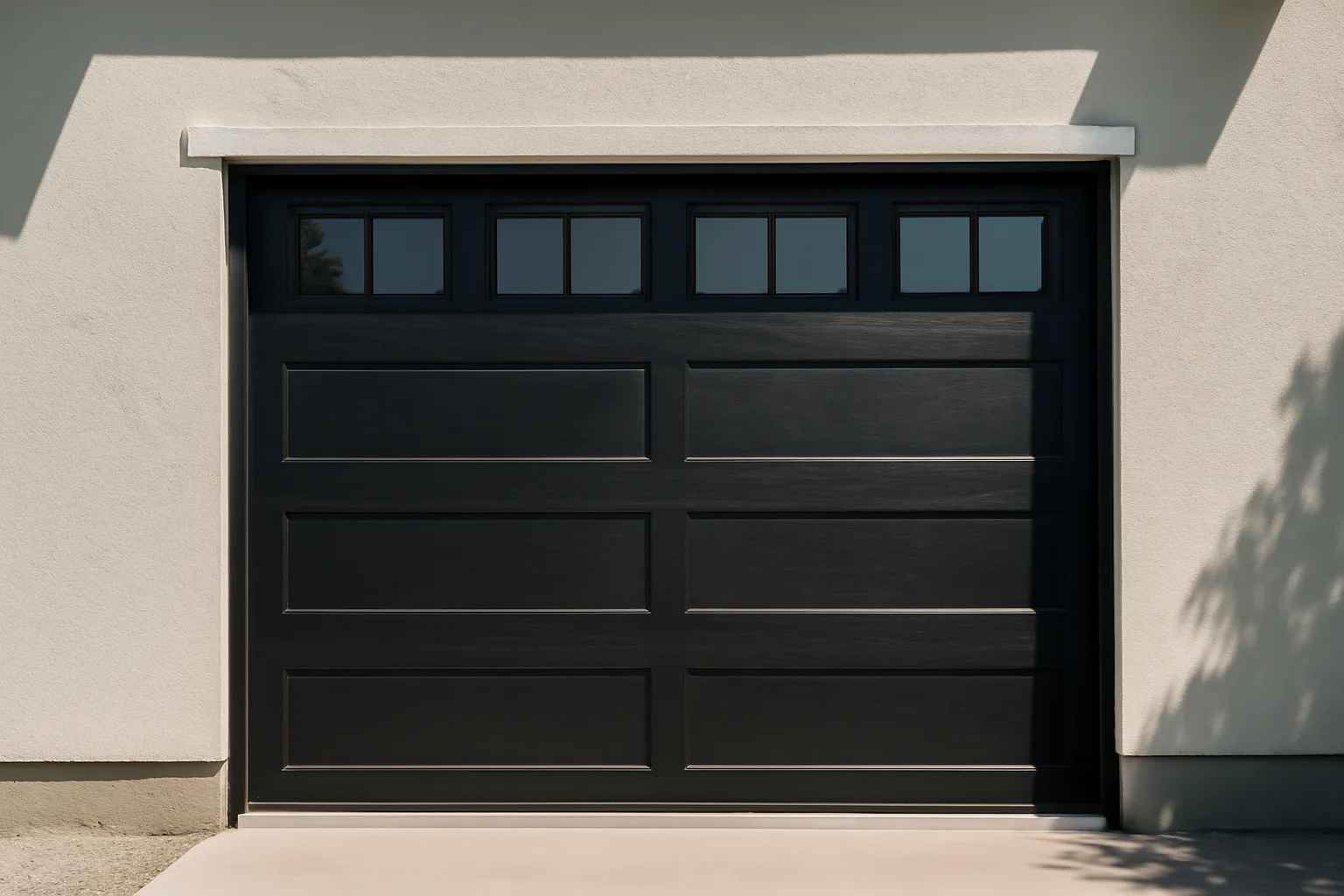
Why do garage door springs break in winter?
A spring failure noticed in winter can reflect fatigue and the condition of the individual lifting system; the season alone does not establish its cause. Stop a door with changed assistance and obtain an assessment rather than forcing movement, handling spring fixtures or releasing raised panels for a manual test.
The title of a winter spring complaint should not be mistaken for a diagnosis. A failure noticed during a Rockingham County winter does not prove the weather alone caused it. Springs experience repeated loading and can fatigue. The particular layout, supported door and component condition still matter. No temperature threshold or local weather event is used here to explain every break.
Begin with the job the spring stopped doing
A spring assists weight. When that assistance is inadequate, the powered operator may strain or panels may stop unexpectedly. More force does not restore the missing support or identify the source of the changed load. Keep operation idle where lifting looks compromised and report the first departure from normal movement.
If a break is visible safely, include it without touching the assembly. Connected components can retain load after one spring fails. Winding fixtures, drums and lower attachments are not harmless because the panels are stationary. Leave them alone rather than treating the obvious failure as proof that the rest is discharged.
Consider more than one source of resistance
A guide fault or obstruction can interrupt travel during winter use too. These conditions are not interchangeable with lost assistance. Tell the technician what occurred before the stoppage and where the door sits now. Assessment should relate the findings to the event instead of fitting every complaint to a seasonal explanation.
Another household's replacement is not a prediction of remaining spring life. Use, construction, prior changes and condition can differ. Being in the same county during the same season does not establish equal loads or identical failures. A specific account of this mechanism is more useful than copying a neighbor's repair decision.
Preserve evidence without making a demonstration
Remember the last ordinary cycle, first hesitation or sound and any known collision. Include adjustments already attempted. State gaps in the history honestly. Another powered attempt can alter the original condition and add damage, especially where panels have begun to lean or lifting cables have shifted.
Pass the stop instruction to regular users before anyone arriving presses a remote. Avoid disconnecting raised panels or trying a hand lift to measure how heavy the door feels. A trapped vehicle should be discussed by telephone. The access difficulty matters without making an experiment with damaged support suitable.
Keep owner care outside loaded connections
Only carry out the care identified for the actual equipment. Oil or spray cannot put separated spring metal back together, nor prove what generated a changed load. Force-bearing adjustment points remain outside that routine. An item snagged there should be left and described, without an attempt to remove its connection for cleaning.
Have the estimate name the configuration and explain the selection for the door being assisted. This written proposal is free and precedes correction. Discuss related components if they affect the recommendation. The completed account should then say what observations established the result and what issue, if any, still restricts use. Keep it beside the owner documents. Arrange Windham help at (603) 932-4316 using the event as remembered, without an experiment to support a weather theory. If you will not attend, send the person at the garage the same symptom account. They should know that waiting for assessment involves preserving the stopped mechanism, not demonstrating it for a visiting technician.
For help with this in Windham, see our garage door spring repair page.
Further reading: DASMA's garage door safety guidance.