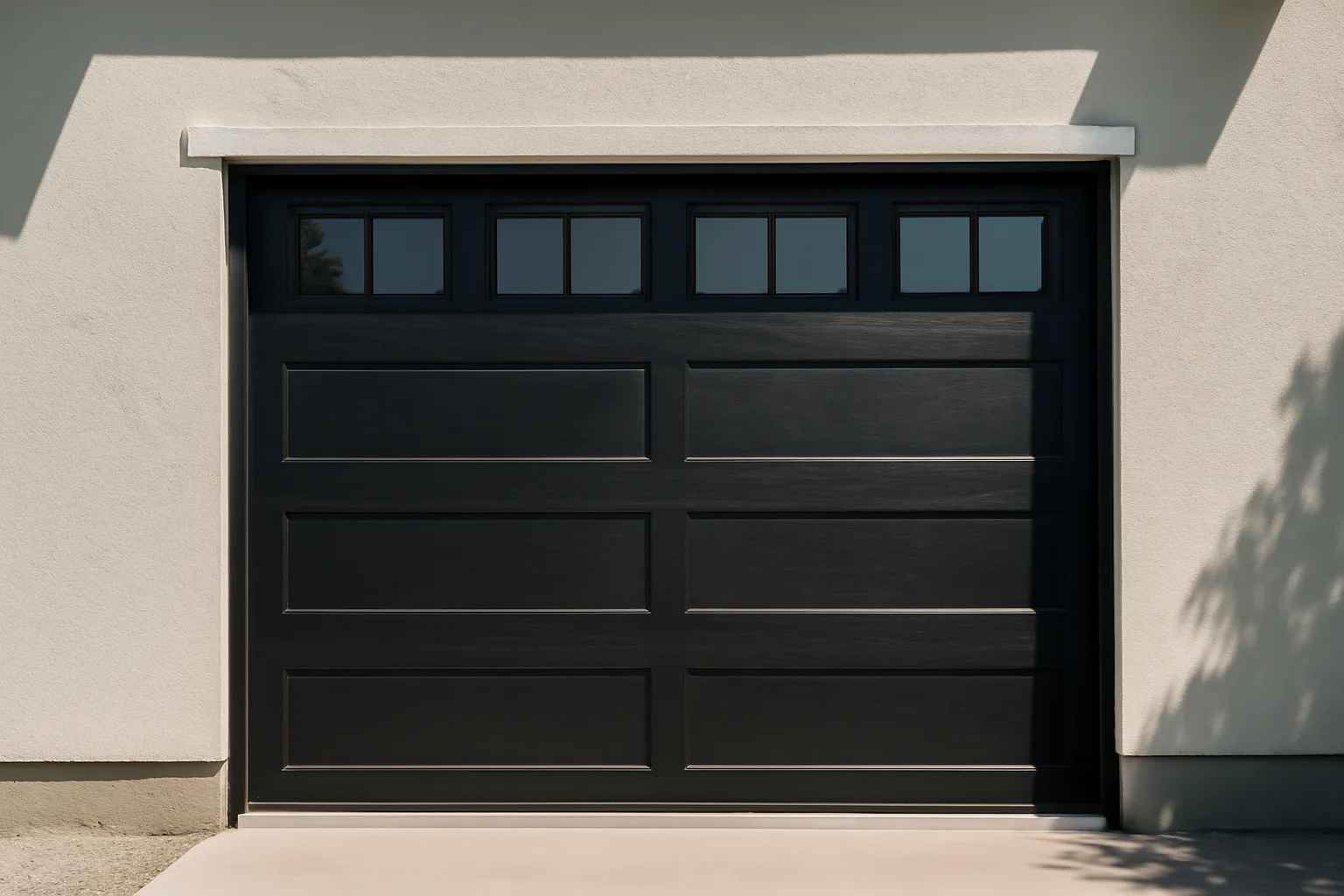
What knocks a garage door off track?
Impact, guide or roller damage and uneven cable support can make a door leave its track. Keep commands idle and arrange a connected mechanical assessment; forcing a reset or altering a rail can redistribute weight while concealing the visible departure and leaving its initiating cause unresolved.
A Windham door outside its track has lost roller guidance, but the escaped roller may not identify the original fault. A damaged rail, roller condition, impact or unequal lifting can each matter. Keep controls stopped and people clear while the connected mechanism is assessed. Forcing the visible part back into place does not explain why it left.
Protect the stopped area first
Make the stop instruction reach all regular users. An arriving person with a transmitter may command movement before noticing the fault. Keep people outside the route, including anyone who might stand near a guide to watch another attempt. Additional travel can displace more rollers or affect panels that were initially undamaged.
Report the present height and the side that sits lower from a safe viewing position. Identification requiring a closer approach can wait. A telephone request does not require inspecting every connection, climbing or positioning someone beneath suspended panels. What is already known can establish the practical concern.
Understand the support and guidance relationship
Cables convey spring assistance while rails direct roller movement. A lifting imbalance can twist panels into an otherwise suitable guide. A guide distorted by contact can also obstruct movement first. Different sequences may therefore produce a similar departure. Ask how the assessment distinguishes the initiating condition from damage that followed.
A loose appearance is not a load measurement. Other attachments and the opposite side may still transmit spring force. Do not touch the cable, its bottom fixing or drum. A door standing still does not establish that every connection has become unloaded or safe to alter during a household inspection.
Avoid returning appearances before diagnosis
Do not reshape the rail, loosen bolts for clearance or shove a roller through a gap. Powered pulling is also unsuitable for making panels look square. These attempts can transfer load while leaving the initial defect untouched. A level resting position does not establish appropriate support and guidance for the next cycle.
Raised panels should not be released where assistance is uncertain, and a helper is not a lifting prop. Explain a trapped vehicle or lack of another entrance on the phone instead. Access pressure makes the practical plan important, without authorizing an improvised test of what the damaged hardware can carry.
Ask for the cause within the proposal
Give the remembered sequence, including scraping, a collision or an earlier intervention if known. State uncertainty rather than add a guessed diagnosis. The free written estimate should distinguish returning guidance from cable correction or replacing a bent section. Each task needs a reason connected to the findings, and retained components should suit the completed arrangement.
When correction is finished, obtain the observations supporting restored travel and any limitation still present. Keep that explanation with the cause and work record for later comparison. Use (603) 932-4316 to arrange help, providing the real Windham property, current position and usable entry. Calls are accepted continuously and same-day service is available, with the appointment agreed directly. Preserve the mechanism as found until it can be assessed instead of preparing a demonstration. A useful result explains the condition addressed, not merely the fact that the escaped roller is hidden inside its route again. Share that instruction with anyone attending for you so the booking does not become a request for a household reset before arrival.
Our garage door cable & track repair page covers how this is handled on a visit.
Outside source: the CPSC's garage door safety notes.